

Adaptogens for Allergies: Calming the Seasonal Response

Share
Watery eyes, an itchy nose, that foggy, tired feeling — for many of us, seasonal allergies are a yearly ritual we didn’t sign up for. Allergic rhinitis (hay fever) is now considered one of the most common chronic conditions worldwide. According to the American Academy of Allergy Asthma & Immunology, estimates suggest that allergic rhinitis affects between 10–30% of the global population, and sensitisation to environmental allergens may be as high as 40%.
In the UK, Allergy UK reports that allergic rhinitis affects around 26% of adults, and in a recent survey, almost 49% of people reported hay fever symptoms — even if they hadn’t been formally diagnosed. No wonder spring and summer have become peak “search season” for natural allergy relief.
Conventional medicines like antihistamines and steroid nasal sprays are often essential, especially for moderate–severe symptoms. But many people are also exploring a broader, lifestyle-based approach: supporting the immune system, calming inflammation and managing stress with tools like adaptogens and anti-inflammatory mushrooms.
This is where a daily DIRTEA ritual can play a gentle supporting role — not as a cure for allergies, but as part of a more resilient, calmer seasonal response.
What’s actually happening in seasonal allergies?
When you react to pollen, dust or pet dander, your immune system is essentially over-responding to something harmless:
- Allergen exposure (e.g. grass or tree pollen)
- IgE antibodies recognise the allergen and trigger immune cells
- Histamine and other mediators are released in the nose, eyes and airways
- You feel it as sneezing, itching, congestion, watery eyes and fatigue
Modern reviews highlight that allergic rhinitis is driven by an imbalanced immune response (often Th2-dominant) and ongoing inflammation at the level of the nasal mucosa.
That’s why a holistic strategy looks beyond “shutting down” symptoms and instead asks:
- How can we support a calmer, more balanced immune response?
- How can we reduce overall inflammatory load?
- How can we keep the nervous system and sleep more stable during high-pollen months?
Adaptogens and anti-inflammatory mushrooms sit right at this crossroads.
Adaptogens 101: Why they’re relevant to natural allergy relief
Adaptogens are botanicals and fungi traditionally used to help the body adapt to stressors and maintain internal balance (homeostasis). To be classed as an adaptogen, a substance is generally:
- Non-specific in action (supports multiple systems)
- Non-toxic at typical doses
- Thought to help normalise the stress response over time
When it comes to allergies, there are two big reasons adaptogens are interesting:
-
Stress & allergies are linked
Chronic stress can influence immune signalling, sleep and gut health — all of which affect how reactive you feel during pollen season. A calmer nervous system can mean a calmer experience of symptoms. -
Immune modulation, not immune suppression
Many adaptogens and functional mushrooms are being studied for immunomodulatory effects — helping immune responses become more balanced rather than simply “switched off”. For allergies, that nuance matters: you want your immune system to defend you, but not to overreact to every speck of pollen.
The research on adaptogens directly improving allergy symptoms in humans is still early, and they are not a replacement for prescribed treatments. But the emerging science around immune balance, inflammation and resilience makes them a promising part of a broader plan for natural allergy relief.
Anti-inflammatory mushrooms: calming the seasonal response from within
Functional mushrooms are unique among adaptogens thanks to their naturally occurring beta-glucans, triterpenes and polyphenols — plant- and fungi-derived compounds currently being studied for their potential antioxidant and balancing effects in the body. Although research is still developing, these findings are sparking curiosity around how such mushrooms might support wellbeing during the changing seasons.
Let’s look at a few of the mushrooms most often used in adaptogenic blends — including DIRTEA powders — and how they can feature in a gentle seasonal ritual.
Reishi: calm, balance and evening grounding
Reishi (Ganoderma lucidum) has long been valued in Traditional Chinese Medicine as a symbol of calm and longevity. Modern scientific interest focuses on its complex mix of polysaccharides and triterpenes, which are being explored for their influence on the body’s stress and immune pathways in laboratory settings.
While Reishi isn’t a treatment for allergies, many people find it a meaningful part of a wider wellbeing routine — one that encourages relaxation and evening wind-down during busier, high-pollen months.
DIRTEA angle:
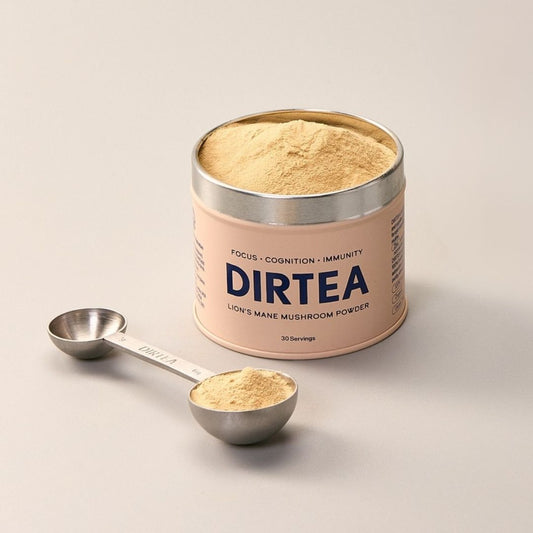
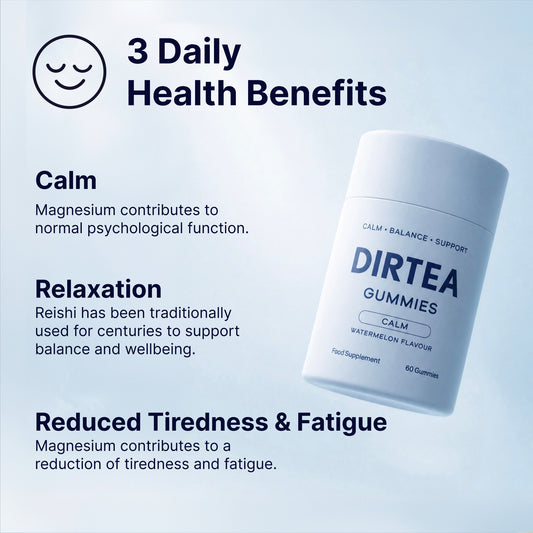
DIRTEA Reishi Calm Powder blends high-quality Reishi extract with vitamin B12, which contributes to normal psychological function and immune system support. Making it part of a nightly drink can help create a calming ritual that supports balance through seasonal shifts.
Chaga: everyday defence and natural balance
Chaga (Inonotus obliquus) is often referred to as a “forest-grown antioxidant” thanks to its deep colour and traditional use in hot infusions. Modern reviews describe its bioactive compounds as subjects of interest for their potential to help the body respond to everyday oxidative stress.
Though it isn’t a remedy for allergic reactions, including a mushroom such as Chaga in your day may complement a diet rich in colourful plants and nutrient-dense foods — supporting an overall sense of vitality during allergy season.
DIRTEA angle:
DIRTEA Chaga Immunity Powder also includes vitamin B12, which contributes to the normal function of the immune system and helps reduce tiredness and fatigue. It’s a simple way to bring a sense of balance and energy to your morning or midday ritual.
Lifestyle foundations for calmer allergy seasons
Adaptogens work best when they sit on top of solid foundations. Alongside your mushroom ritual, consider:
-
Allergen management
- Shower and change clothes after high-pollen outdoor time
- Rinse nasal passages with saline sprays or a neti pot (if appropriate for you)
- Use HEPA filters in key rooms if possible
-
Diet & hydration
- Prioritise whole, minimally processed foods
- Include sources of omega-3 fats (oily fish, chia, flax)
- Stay well hydrated to keep mucus thinner and more comfortable
-
Stress reduction
- Spring can be busy — especially if work and family life are full-on
- Micro-rituals with adaptogens (like a 5-minute Reishi break in the evening) can be anchors that remind your nervous system it’s safe to slow down
-
Check your medication plan
- Work with your GP or pharmacist to optimise antihistamines, nasal sprays and eye drops if needed
- Never stop or change prescribed treatment purely based on supplements
The takeaway: a softer season, not a magic switch
Seasonal allergies are complex, and there’s no single mushroom or adaptogen that can make them disappear. But by combining:
- Evidence-based medical care
- Simple environmental tweaks
- A nutrient-dense, anti-inflammatory way of eating
- And a consistent ritual with anti-inflammatory mushrooms like Reishi and Chaga
…you create a foundation for calmer, more manageable seasons.
DIRTEA’s goal is to make that ritual feel luxurious, soothing and genuinely enjoyable — so “natural allergy relief” isn’t just a supplement you remember occasionally, but a daily moment you look forward to.
FAQs: adaptogens, mushrooms and allergies
Can adaptogens replace my antihistamine?
No. Adaptogens and anti-inflammatory mushrooms are not a replacement for prescribed allergy medicines. They’re best thought of as background support for stress, immune balance and overall resilience. Always follow your doctor’s advice and use over-the-counter or prescribed treatments as directed.
How long do anti-inflammatory mushrooms take to work?
Functional mushrooms are generally not instant-relief tools. Most research and traditional use suggest they’re taken consistently over weeks or months. Many people build a daily DIRTEA ritual and notice shifts in energy, sleep or general balance over time — but responses are individual, and they’re not intended to “switch off” allergy symptoms on the spot.
Are mushrooms safe for everyone?
While Reishi, Chaga and Cordyceps are widely used always check with your healthcare professional before adding new mushroom supplements or adaptogens.
Which DIRTEA product should I start with for seasonal support?
If your goal is a calmer seasonal response and more resilience, you might:
- Start with Reishi Calm Powder for evening wind-down and immune support (via B12)
- Add Chaga Immunity Powder in the daytime for antioxidant and immune support (again, via B12)
- Layer in Cordyceps Performance Powder or Gummies if you want extra support for energy and movement
You don’t have to use everything at once — begin with one product that fits naturally into your day and build from there.
References
American Academy of Allergy, Asthma & Immunology. (n.d.). Allergy statistics. Retrieved December 8, 2025, from https://www.aaaai.org/about/news/for-media/allergy-statistics
Allergy UK. (n.d.). Statistics and figures. Retrieved December 8, 2025, from https://www.allergyuk.org/about-us/media-centre/statistics-and-figures/
Husna, S. M. N., Tan, H.-T. T., Md Shukri, N., Mohd Ashari, N. S., & Wong, K. K. (2022). Allergic rhinitis: A clinical and pathophysiological overview. Frontiers in Medicine, 9, 874114. https://doi.org/10.3389/fmed.2022.874114 PubMed